

“Do not be anxious about anything.” For someone who is already anxious, those words can feel less like comfort and more like a verdict. You read them and think, *I know I am not supposed to feel this way. I have prayed. I believe God is good. So why is my body still tense?
Why is my mind still racing? Why can I not switch this off? * Then anxiety is joined by shame. But Philippians 4 was not written to give struggling Christians another reason to believe they are failing. Paul was writing to real people living with conflict, uncertainty, and pressure. His words form an invitation, not a demand to produce instant calm.
Listen to the podcast episode
What Does the Bible Really Say About Anxiety?
Prefer to listen? Press play above. Prefer to read? Keep scrolling.
Read the Whole Invitation
Philippians 4:6 continues by telling us what to do with anxiety:
“In every situation, by prayer and petition, with thanksgiving, present your requests to God.”
Paul does not say anxious thoughts prove God is absent. He directs anxious people toward relationship: bring the situation, the request, and the need to God. The passage then speaks about the peace of God guarding our hearts and minds in Christ Jesus.
A guard does not pretend there is no threat; rather, a guard remains present in the middle of it. Peace may arrive as a settled feeling, or it may look like enough steadiness to take the next responsible step while your emotions are still catching up.
Anxiety and Faith Can Exist in the Same Person
Faith is not measured by whether your nervous system reacts. You can trust God and still experience a racing heart. You can know Scripture and still need help interrupting a fearful thought pattern. You can pray sincerely and still benefit from sleep, food, movement, medical care, counselling, or medication prescribed by a qualified professional.
Those forms of care do not compete with God. We are whole people. Spiritual, emotional, physical, relational, and practical needs affect one another. Caring for one part of your life can create room to engage another part more honestly.
This article and podcast offer spiritual encouragement and practical education. They do not replace individualized care from a qualified medical or mental-health professional. If anxiety is persistent, severe, disrupting daily life, or making you feel unsafe, asking for professional support is a wise next step.
Separate the Fact From the Fearful Prediction

Anxiety often attaches a prediction to a fact and presents both as equally certain.
Fact: I have not received a reply.
Prediction: They are angry, I have ruined the relationship, and I will be rejected.
Fact: The doctor ordered another test.
Prediction: The result will be terrible and I will not be able to handle it.
Fact: Money is tight this month.
Prediction: We will lose everything and never recover.
The fear is real, but the prediction is not yet a verified fact. Naming that distinction does not dismiss your concern. It helps you respond to what is actually happening instead of trying to survive every imagined outcome at once.
Try Four Honest Columns
Take one situation and divide a page into four parts.
Facts
What can you verify right now? Keep this section plain and specific.
Fears
What are you afraid could happen? You do not need to censor it. Naming a fear gives you something clearer to bring to God.
Requests
What do you need from God today? Wisdom? Provision? Courage? Sleep? Help making a phone call? The larger outcome may still matter, but today's request can be specific.

Next steps
What belongs to you now? Your next step may be sending the message, booking the appointment, asking for help, drinking water, stepping away from searching for another hour, or returning to the next ordinary responsibility in front of you. The purpose is not to organize yourself out of anxiety, but to reduce the fog enough to see what is true, what you fear, what you are asking, and what you can actually do.
Prayer and Practical Support Belong Together
Sometimes Christian conversations about anxiety become an either-or choice. Either you pray or you seek counselling. Either you trust God or you use a practical coping strategy. Either you have faith or you admit you need help. That divide is unnecessary and can be harmful. Prayer keeps us connected to God.
Scripture renews the mind. Wise community reminds us we are not alone. Physical care supports the body. Qualified professionals can help us understand symptoms, patterns, trauma, or conditions requiring treatment. Receiving help is not an announcement that God was insufficient. Help may be one of the ways He is caring for you.
A Prayer for the Anxious Christian
God, You see what is happening in my mind and body. You know the facts, the fears I have attached to them, and the things I cannot control. Help me bring my real requests to You without shame. Give me wisdom for the next step and humility to receive support where I need it. Guard my heart and mind, even if peace comes more slowly than I hoped. In Jesus' Name I pray, Amen.
Want the Full Conversation?
In the full episode, we slow down Philippians 4, discuss the difference between peace and immediate relaxation, and talk honestly about prayer, physical care, and professional support.
Listen to the podcast episode
What Does the Bible Really Say About Anxiety?
Begin With Gentle, Scripture-Rooted Support
The free From Fear to Faith devotional was created to help you bring fear into the light of Scripture without turning the process into another performance. Get the free From Fear to Faith devotional If you want a longer, structured path through a specific area of spiritual growth, explore the guided devotional library. Explore guided devotionals
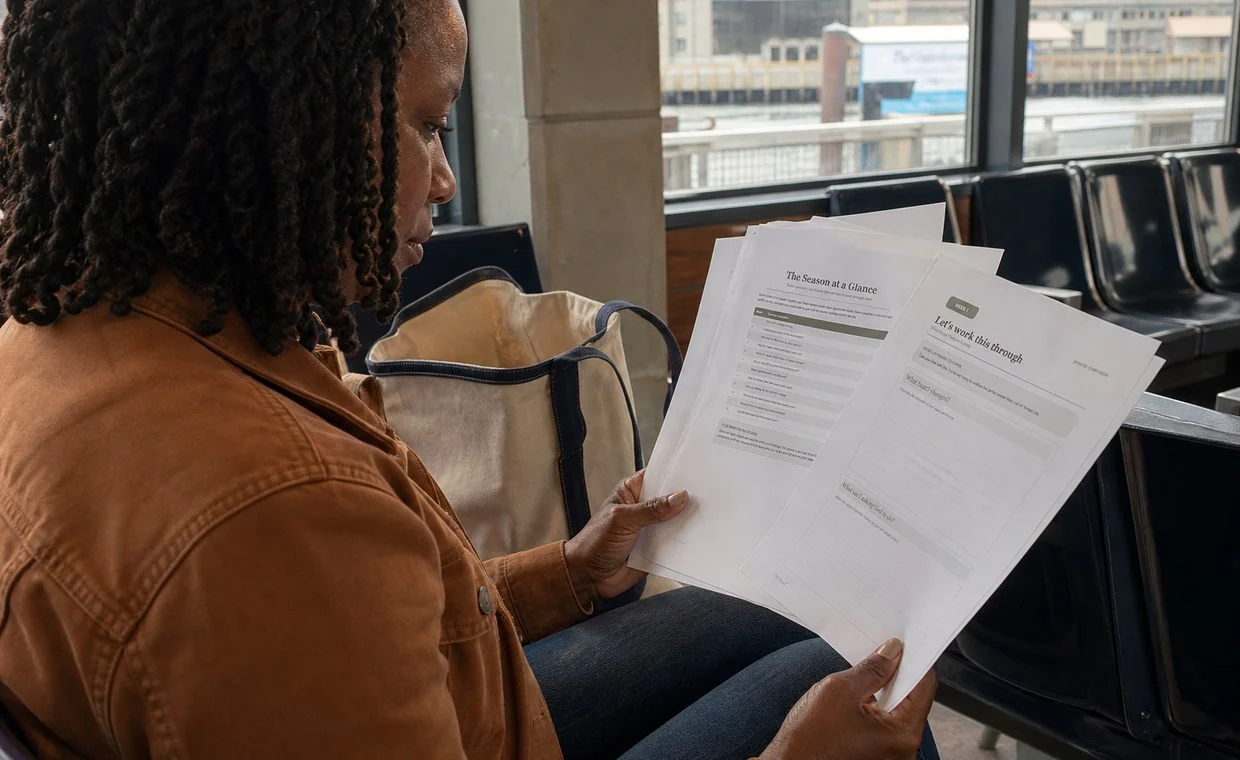
Built for Real Life Companion Guide
Work through the episode with a practical, Scripture-rooted tool created for this season of the inTENNtional with God podcast.
Get the Free Companion Guide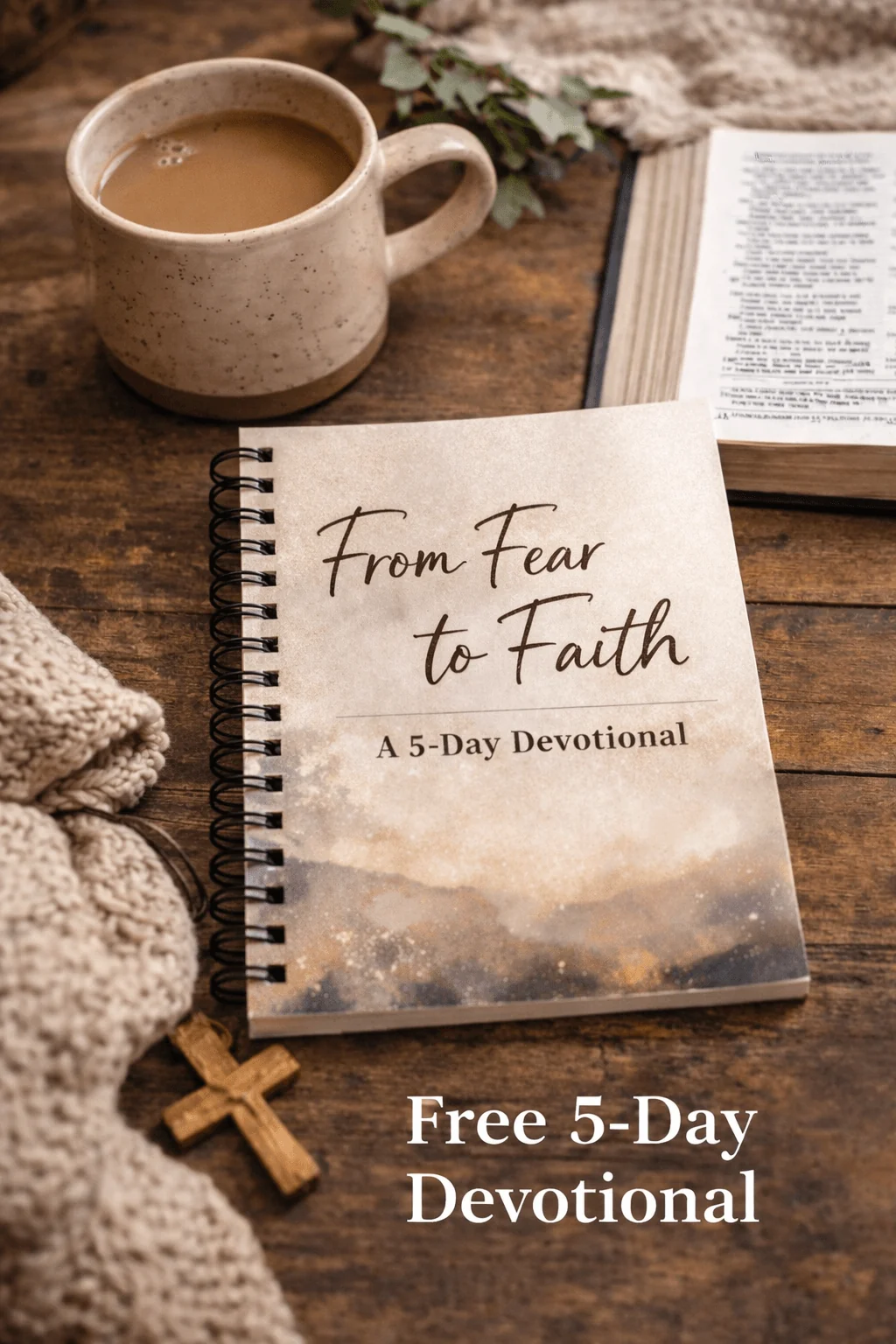
From Fear to Faith
Begin with a free five-day devotional created to help you bring anxious thoughts to God with honesty and Scripture.
Get the Free Devotional